THE CURE FOR OLD AGE IS HERE

My speculative thriller, The Cure, about the discovery of a cure for ageing is no longer speculative.
An alleged cure has been launched in real life, somewhat earlier than I thought.
My fictional gene therapy, the ReJuve, reverses your biological age with just one injection a year through a molecular reboot. Well as of now, you can join a waitlist for a real-life gene therapy that also claims to extend your life with one annual jab. It’s called Klotho, and it’s coming to market this year.
The company who makes Klotho is Minicircle, based in Austin, Texas. Their mission is “to empower people to build the future they envision for themselves through modern gene therapy.” They named their therapy after the Greek goddess Klotho, the youngest of the three fates who spins the thread of life.
Their company creed is similarly ballsy: “Align your biology to your ambitions.”
I wrote The Cure during 2024 based on research into the burgeoning longevity industry. A lot of money is being poured into anti-ageing solutions and start-ups by tech, retail and finance billionaires as well as big pharma.
Everyone is racing to be the first to the Holy Grail: a treatment that can cheat death.
Could Klotho be the answer? If so, how does it actually work?

Photo credit Phil Robson, Unsplash
Klotho increases the production of anti-ageing proteins which naturally decline in humans with age. The company claims it also improves cognition and reduces the risk of cardiovascular and kidney disease. The therapy does not change your genome and is not permanent, which is why the injection needs to be repeated every year.
But despite claiming that one of the company values is scientific rigour, Minicircle is not operating under independent regulatory supervision. The only clinical trial conducted in humans was for 24 people. So far, no results have been published.
To get around the fact that Klotho has not been approved by the FDA or any other regulatory bodies, willing customers will need to travel to special clinics in the Bahamas, Honduras or Panama where independent regulatory scrutiny does not apply.
This mirrors my scenario in The Cure, where a permanent antiageing therapy called the SuperJuve is developed in a special economic zone in Montego Bay, Jamaica called GenoCity. GenoCity is a fictional autonomous city state exempt from national laws where biotech can conduct research ‘off grid’ and operate under its own rules. Punters travel here and to other special clinics abroad to have the SuperJuve because regulated markets won’t approve it, due to the lack of safety data and fears about adverse effects.
I based GenoCity on the real-life charter city Prospera in Honduras which operates in exactly this way, with complete autonomy from national laws. It just so happens that Prospera is one of the three clinic locations where Klotho will be administered.
So, aside from the safety concerns, what evidence is there that Klotho will actually work?
“The regulatory rules these companies complain of are not the red tape of overzealous bureaucrats.
They’re the direct inheritance of past tragedies, and that’s easy to forget when you’re focused only on the opportunities.”

Photo credit Nikolett Emmert, Unsplash
According to Minicircle’s website, mice who were genetically modified to make excess klotho protein lived up to 30% longer, whereas those without the protein had accelerated ageing and died young.
It also improved memory in monkeys. We have no idea what the impact is on humans though. Treatments that work in mice and monkeys don’t always translate well.
Gene therapies are not to be fooled with: an issue I explore in The Cure where long term side-effects from the SuperJuve have disastrous consequences. It’s still very much an emerging area, as scientists interviewed by New Scientist in a recent article about Klotho testify, and even in independent trials in humans with the proper supervision, there have been deaths.
Whilst Minicircle cite the eye-watering expense of conducting clinical trials in regulated markets, experts say extensive clinical testing is necessary because therapies that seem promising in small trials often end up failing in larger, more rigorous ones.
But to some people, such risks are worth taking. You only have to look at the testimonies on Minicircle’s website.
I wonder how many have already joined their waitlist, happy to be human guineapigs.
Based on my research for The Cure on the irresistible draw of an end to old age, I’ll bet quite a lot.
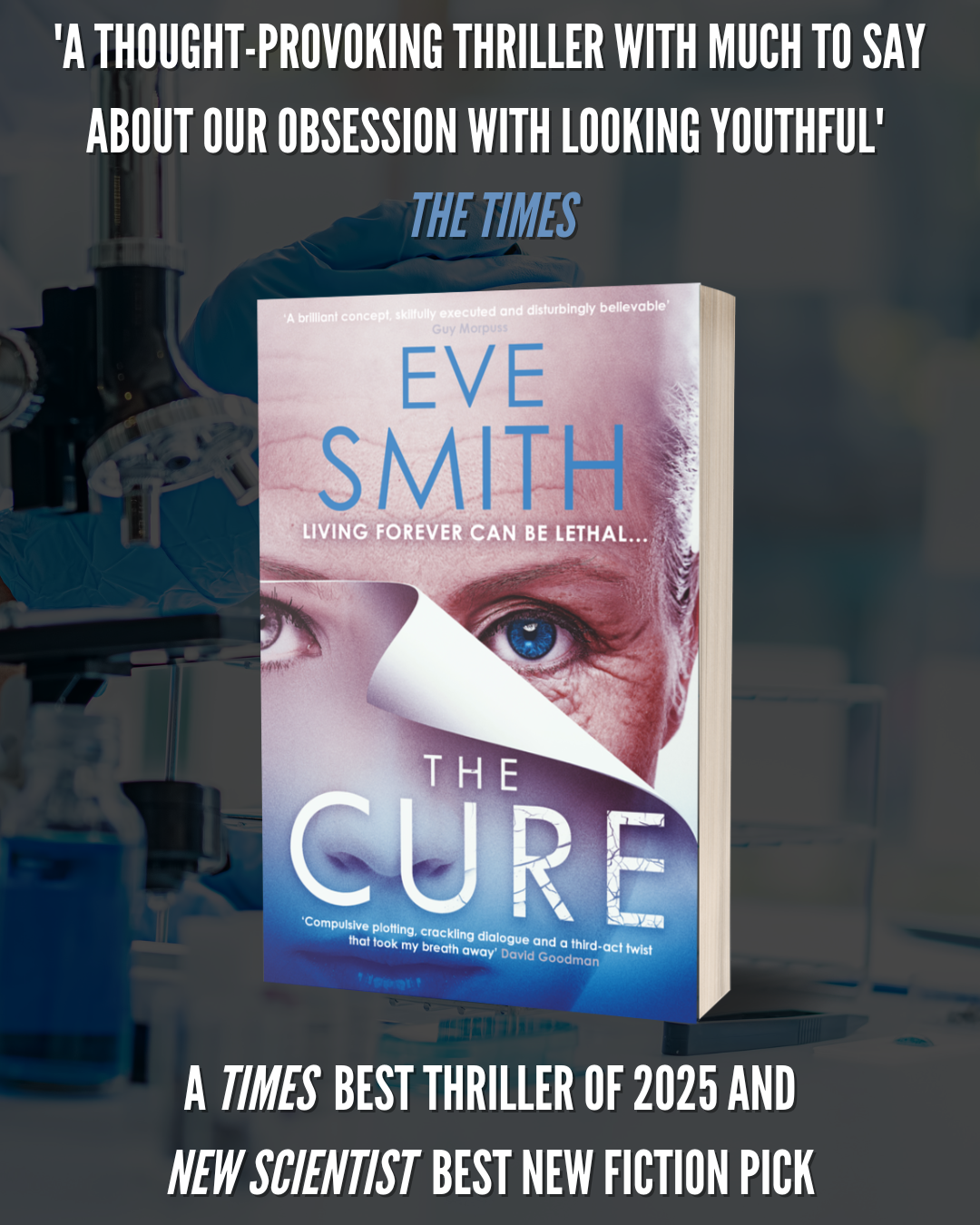
If you haven’t yet dived into my not-so-fictional world of The Cure, you can order a print copy, e-book or audiobook here.